
You come home after a long day, and your robot vacuum has already finished cleaning. The floors look tidy, the dust has been picked up, and everything seems to be working exactly as you hoped when you bought it.
But a few days later, something changes.
Your robot starts making an unusual noise. Maybe it stops halfway through a cleaning run and displays a main brush error. Or perhaps it keeps moving, but it doesn’t seem to pick up dirt as well as it used to.
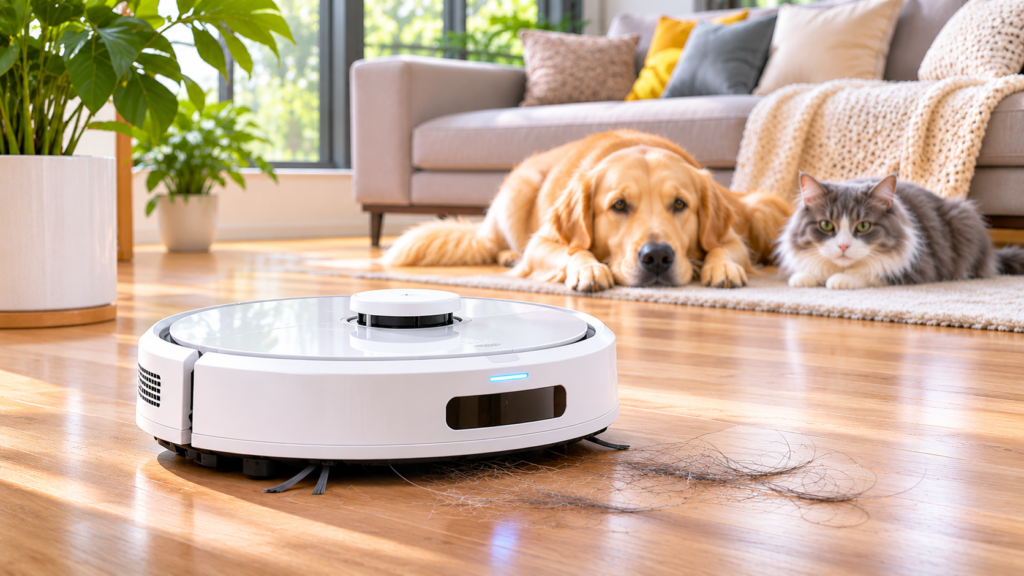
You turn it over to take a look.
There it is: a thick bundle of long hair wrapped tightly around the main brush. Some strands have wound themselves around the ends of the roller, making them especially frustrating to remove.
You patiently pull the hair away, put the brush back in place, and send the robot out again.
A few days later, the same thing happens.
The frustrating part isn’t necessarily having to maintain your robot. Every appliance needs a little care. It’s that you bought a robot vacuum to take a chore off your plate, not to give yourself another one to deal with every few days.
So why does hair keep wrapping around the brush? And is there a way to reduce the problem without replacing your robot?
The good news is that, in many cases, a few simple maintenance steps can make a real difference. But first, it helps to understand where the hair is getting caught and why the problem keeps coming back.
Today, let’s look at what causes robot vacuum brush tangles, how to remove them safely, and what you can do to keep your robot cleaning with less intervention.
Why Does Hair Get Tangled Around a Robot Vacuum Brush?
To understand the problem, it helps to know how a robot vacuum picks up debris.
Most robot vacuums use a rotating main brush underneath the machine. As the robot moves across the floor, the brush helps loosen and guide dust, hair, pet fur, and other debris toward the suction inlet.
That rotating action improves cleaning, but it also gives long strands of hair something to wrap around.
Long hair is more likely to wrap around the brush
A short strand of hair may be carried into the dustbin without much trouble. Long hair is a different story.
When one part of a long strand catches on the rotating brush, the rest can be pulled along with it. After several rotations, the strand may wrap around the roller multiple times.
As more hair collects, new strands can become trapped in the existing bundle, creating a tighter knot.
That’s why households with long-haired family members may notice brush tangles more frequently.
Hair can collect at both ends of the brush
Hair doesn’t always wrap evenly around the entire roller.
On some brush designs, strands can work their way toward the ends of the brush as it rotates. They may become trapped near the end caps, bearings, or mounting points.
This creates a problem that’s easy to miss: the middle of the brush may look relatively clean while a surprising amount of hair is packed around either end.
If you only remove the visible hair from the center, you may leave behind the buildup that’s making the brush harder to turn.
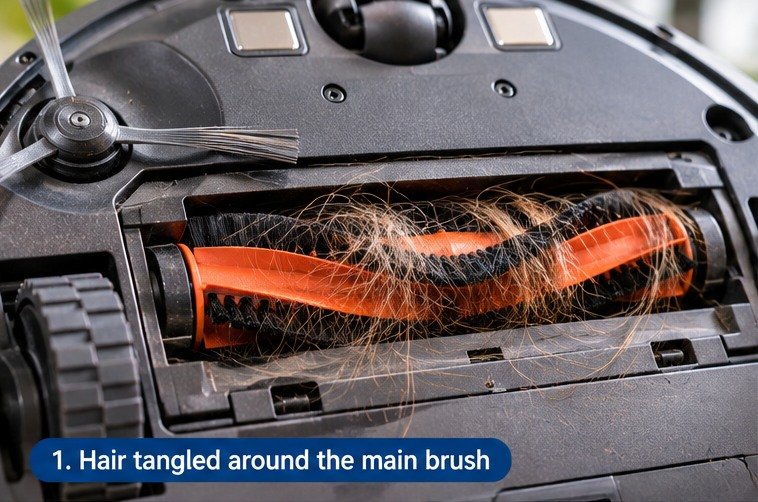
Both iRobot and Roborock specifically advise checking the ends of their brushes when cleaning or troubleshooting tangles.
Pet fur can add to the buildup
If you have a dog or cat, shedding can increase the amount of material your robot handles every day.
Short pet fur doesn’t necessarily tangle in the same way as long human hair. However, fur can mix with hair, dust, and fabric fibers to form stubborn clumps.
How much trouble this causes depends on your robot’s brush design, your flooring, and how heavily your pets shed.
Brush design makes a difference
Traditional bristle brushes, rubber rollers, and specialized anti-tangle brushes interact with hair differently.
Some designs reduce the places where hair can catch. Others are built to guide strands toward the suction inlet or limit buildup around the roller.
But a rubber brush—or a product advertised as anti-tangle—doesn’t automatically mean you’ll never need to remove hair again.
What matters isn’t simply whether hair gets tangled. It’s how much builds up, whether it affects cleaning, and how easy the brush is to maintain.
How to Remove Tangled Hair From a Robot Vacuum Brush Safely
If your robot is still cleaning normally and you’ve simply noticed hair wrapped around the brush, there’s no reason to jump straight to buying a replacement part or a new machine.
Start with a careful cleaning.
Step 1: Turn off the robot and remove the main brush
Stop the cleaning cycle, power down the robot according to the manufacturer’s instructions, and remove it from its dock.
Place it upside down on a soft, flat, stable surface to help protect the housing and sensors.
Locate the main brush cover or release mechanism. If your model has a user-removable brush, open the cover and gently lift the brush out as instructed in the manual.
Don’t force a latch or pull on a component if you’re unsure how it releases.
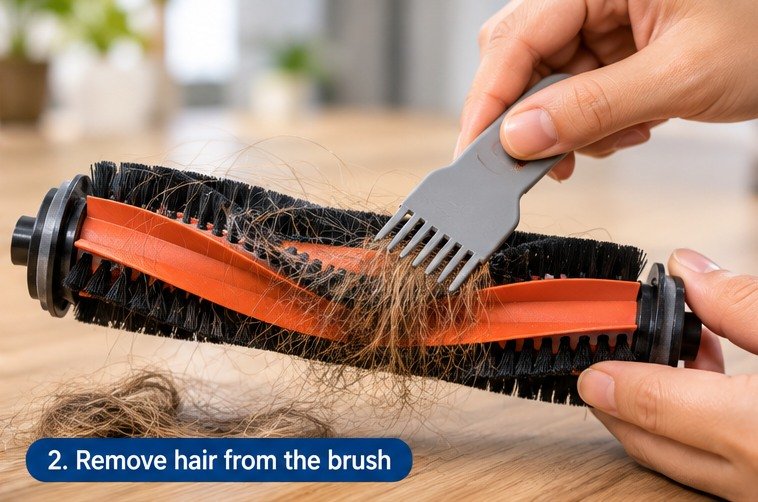
Step 2: Remove hair from the roller
Use the cleaning tool supplied with your robot, or another method recommended by the manufacturer, to remove hair from the roller.
If several strands have formed a tight bundle, work them loose gradually rather than pulling the entire knot at once.
Some manufacturers allow the use of a dedicated cutting tool. However, avoid using sharp scissors or blades close to rubber surfaces, bristles, or mechanical parts unless your robot’s instructions specifically permit it.
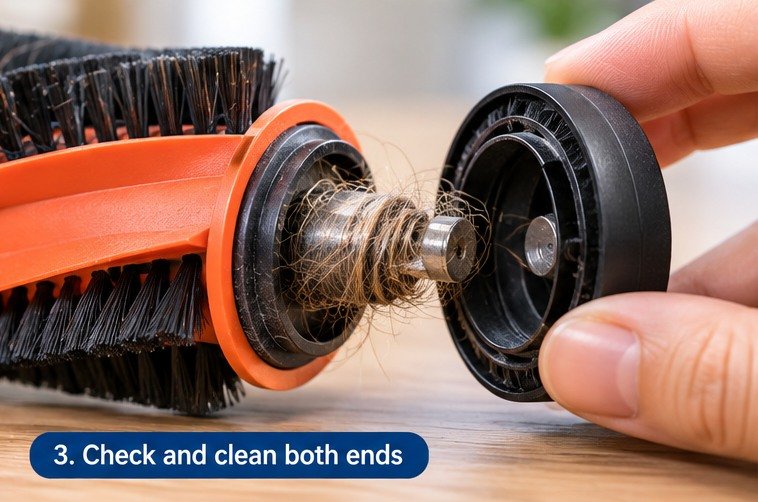
Step 3: Check both ends of the brush
This is one of the most important steps—and one of the easiest to overlook.
Once the main roller is clean, inspect both ends.
If your robot has removable end caps, follow the manufacturer’s instructions to take them off and check for hair underneath.
You may find a tightly packed ring of hair around the axle even though the rest of the brush looks clean.
Remove any accessible buildup, then reinstall the caps securely.
Don’t disassemble bearings, motors, or other internal components that aren’t intended for routine user maintenance.
Step 4: Clean the brush compartment and reassemble
Check the brush compartment, mounting slots, and side brush for trapped hair or debris.
Make sure nothing is blocking the parts that are supposed to move.
Reinstall the main brush, end caps, and brush cover in their correct positions.
Then run a short cleaning cycle in an open area.
If the brush still makes unusual noises, doesn’t rotate properly, or triggers another error, stop the robot and consult the troubleshooting instructions for your specific model.
For example, Roborock’s guidance for Error 5 tells owners to check the main brush, both ends, and the installation slots before contacting support if the issue continues.
How to Prevent Hair From Tangling Again
Cleaning the brush solves the immediate problem. But if you’d like to spend less time doing it in the future, a few maintenance habits can help.
Don’t wait for a brush error
If your household has long hair or shedding pets, inspect the brush more frequently at first to see how quickly hair accumulates.
You might check it after several cleaning cycles, then adjust your routine based on what you find.
For reference, iRobot recommends cleaning the main brushes on applicable Roomba models once a week, or twice a week in homes with pets.
That’s a useful example, not a universal schedule for every robot vacuum. Always follow your model’s maintenance instructions.
Pay attention to areas where hair collects
Bedrooms, dressing areas, places where people brush their hair, and your pet’s favorite resting spots may contain more loose hair than other parts of your home.
If you notice unusually large clumps in one area, picking those up before a cleaning run may reduce the load on the robot’s brush.
That doesn’t mean you need to sweep the house before every robot vacuum session. The goal is simply to deal with occasional heavy buildup when it makes sense.
Don’t confuse self-emptying with anti-tangle technology
Many robot vacuums come with a dock that automatically transfers debris from the robot’s dustbin into a larger bag or container.
It’s a convenient feature because you don’t have to empty the robot’s small dustbin as often.
But a standard self-emptying dock doesn’t necessarily remove hair that’s tightly wrapped around the main brush.
Unless your robot has a separate mechanism designed to address brush tangles, you may still need to clean the roller manually.
Does Anti-Tangle Brush Technology Actually Work?
It can make a meaningful difference, but results depend on the specific design and how the robot is used.
A well-designed anti-tangle brush may reduce the amount of hair that wraps around the roller or help guide more of it into the dustbin.
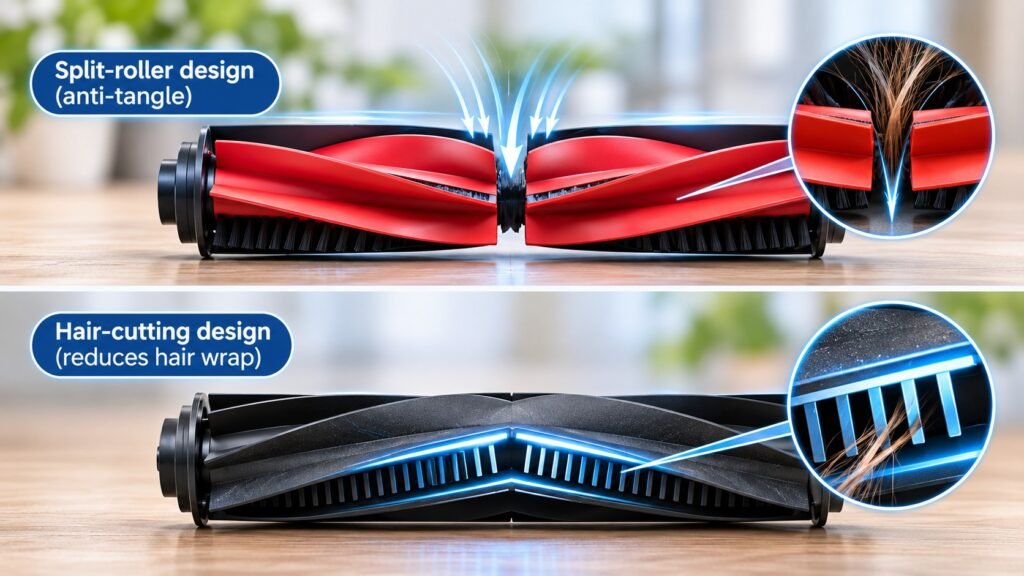
For households that regularly struggle with long hair, that can make everyday maintenance noticeably easier.
For example, Roborock’s DuoDivide system uses two shorter brush sections designed to direct hair toward the central suction inlet. That’s the manufacturer’s stated design purpose—not a guarantee that every household will experience zero tangles.
There are three important distinctions to keep in mind.
Anti-tangle performance isn’t the same as pet hair pickup on carpet
A robot might do a good job preventing hair from wrapping around its brush but still struggle to lift pet fur embedded deep in carpet.
Those are two different abilities.
If you have pets and a lot of carpeting, you’ll want to look at both.
Independent testing from RTINGS evaluates pet hair pickup and brush maintenance separately, which is useful when comparing robot vacuums for pet owners.
Less tangling doesn’t mean zero maintenance
Even if a brush stays relatively free of wrapped hair, you’ll still need to inspect its ends, check the brush compartment, and replace worn components when necessary.
Anti-tangle technology can reduce maintenance. It doesn’t eliminate it.
Not all anti-tangle systems perform equally
Marketing terms can make different technologies sound more similar than they really are.
Rather than relying on a product label or a manufacturer’s headline claim, look for independent testing that shows how much hair remains wrapped around the brush after cleaning.
And if you have carpeting, pay attention to actual pet hair pickup performance as well.
Should You Keep Your Robot, Replace the Brush, or Upgrade?
Hair tangling doesn’t automatically mean your robot is outdated or needs to be replaced.
The better question is how much the problem affects your daily routine.
Situation 1: Hair gets tangled, but the robot still cleans well
If your robot picks up dirt effectively, rarely displays errors, and only needs occasional brush cleaning, there’s probably no compelling reason to replace it.
A sensible maintenance routine may be the most economical solution.
Situation 2: The brush is worn or damaged
If the brush is torn, misshapen, making unusual noises, or has damaged end caps, check the manufacturer’s replacement guidance.
If a compatible replacement brush is available and the manufacturer supports user replacement, changing that part may cost far less than buying a new robot.
If the problem appears to involve the motor or drive mechanism, contact a qualified service provider rather than attempting to dismantle it yourself.
Situation 3: Hair tangles so often that maintenance becomes a real burden
This is when upgrading to a robot with better anti-tangle performance may be worth considering.
For example, if several people in your household have long hair, you have shedding pets, and you’re constantly removing the brush to untangle it, the time spent on maintenance becomes a legitimate factor in choosing your next robot.
Still, don’t upgrade for one feature alone.
Consider cleaning performance, floor types, obstacle avoidance, automation features, and your budget.
The right robot is the one that reduces the work you actually have to do in your home—not simply the one with the longest list of advertised technologies.
Frequently Asked Questions
Can tangled hair damage a robot vacuum?
Yes, excessive buildup can interfere with brush movement and contribute to errors on some models.
iRobot warns that excessive hair accumulation in the brushes can permanently damage certain Roomba units. However, the risk and failure mechanisms aren’t necessarily the same for every robot vacuum.
Can hair still get tangled around a rubber brush?
Yes. Rubber rollers aren’t automatically tangle-free, particularly around the ends of the brush.
Actual performance depends on the design of the specific model.
How often should I clean my robot vacuum’s brush?
Start with the maintenance schedule in your owner’s manual.
If your household has long hair or shedding pets, inspect the brush more frequently and adjust your routine based on how much hair accumulates.
Does a self-emptying robot vacuum clean hair off its brush?
Not necessarily.
Emptying the dustbin and removing hair wrapped around the brush are different functions. Check which features your robot actually provides.
Final Thoughts: Don’t Let Robot Maintenance Become Another Household Chore
Robot vacuums are designed to save you time, but that doesn’t mean they’re completely maintenance-free.
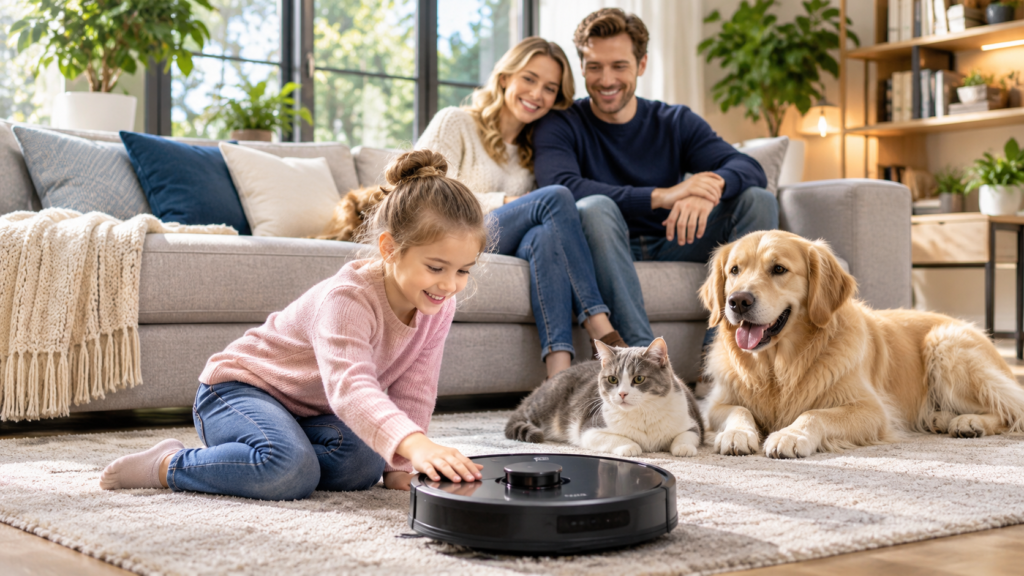
A little hair wrapped around the brush after several cleaning runs isn’t necessarily a serious problem. What matters is whether the buildup affects cleaning performance, causes frequent errors, or forces you to spend too much time maintaining the machine.
If your robot still cleans well, start with proper maintenance—especially around the ends of the brush.
If the brush is damaged, consider replacing the appropriate part.
And if constant detangling has become a genuine frustration, upgrading to a robot with independently verified anti-tangle performance may be worth considering.
Ultimately, the value of a robot vacuum isn’t measured by how many features it has, but by how much time and effort it actually saves you every day.
GearPro – Better technology should make everyday life simpler.